# X1Node Hardware
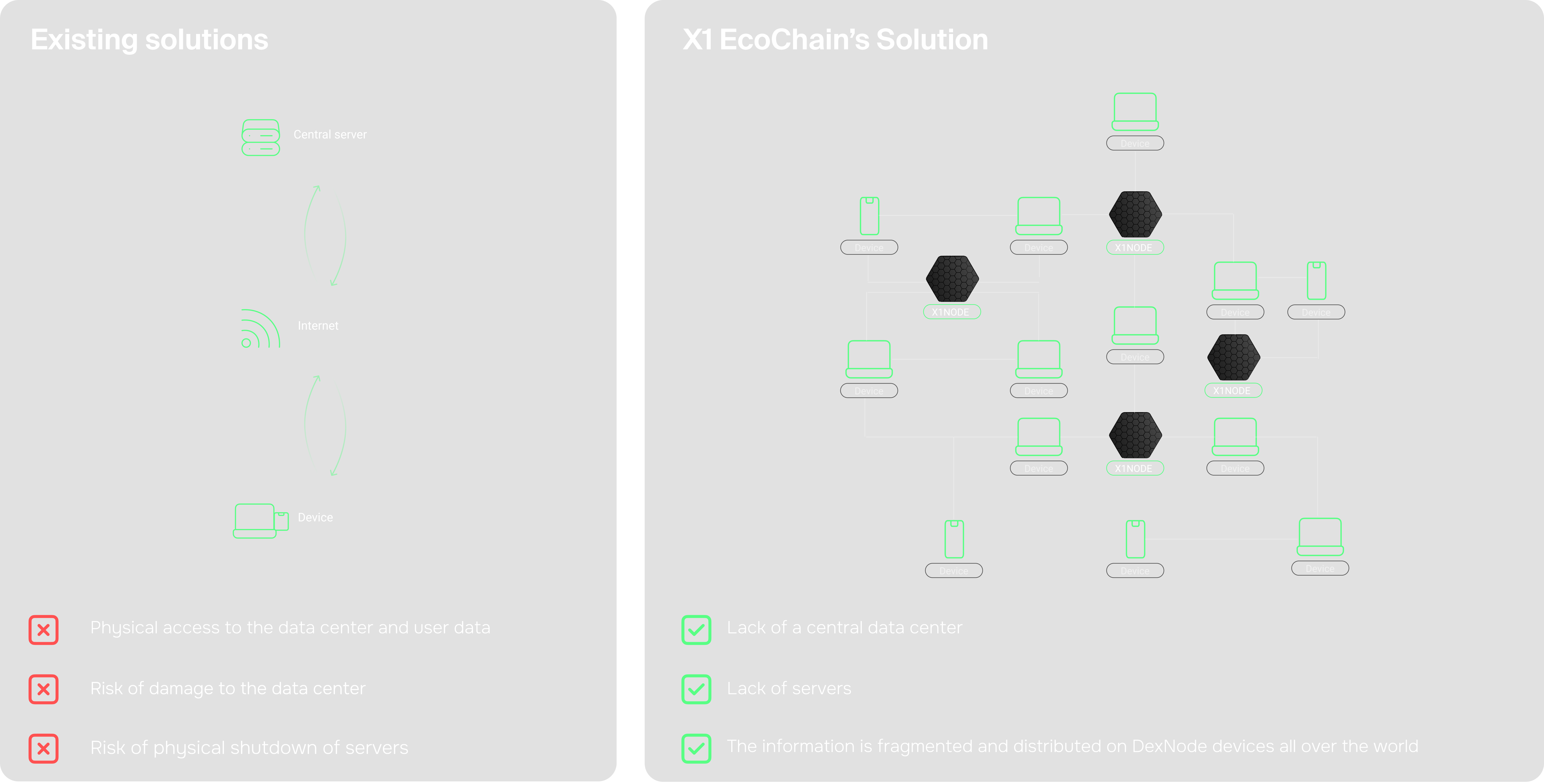
X1 EcoChain’s architecture is optimized around its low-powered nodes and PoA consensus. In the overview, each node in the network runs an X1 EcoChain client, participates in consensus, and hosts smart contracts and assets. Nodes connect in a peer-to-peer mesh, forming a global overlay network. This distributed topology is illustrated below:
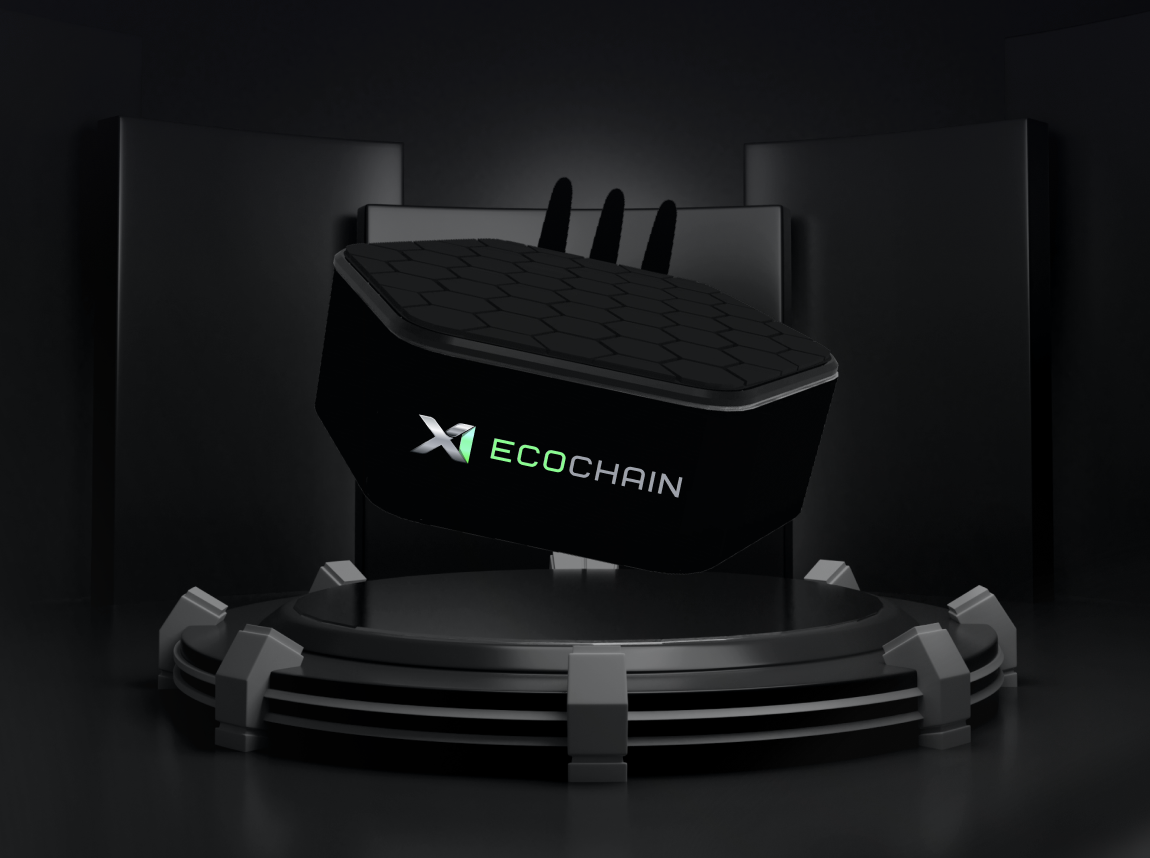
Each X1Node is a compact, consumer-friendly device with the following features:
{% hint style="info" %}
**Compute & Storage:** 4-core CPU (Rockchip RK3566), 4 GB RAM, 1 TB SSD.
{% endhint %}
{% hint style="info" %}
**Connectivity:** Gigabit Ethernet port and built-in wireless (eSIM) for independent network access.
{% endhint %}
{% hint style="info" %}
**Design:** No fans, ultra-quiet (<5 dB) operation. Runs silently at ambient temperature (≈25 °C with no active cooling).
{% endhint %}
{% hint style="info" %}
**Power Use:** Only 3 Wh consumption. It can run on a small AC adapter, making it easy to plug into any outlet.
{% endhint %}
{% hint style="info" %}
**Compact Form Factor:** Small footprint suitable for apartments, offices, or even mobile use.
{% endhint %}
These specifications allow X1Nodes to be mass-produced cheaply and operate for years without maintenance. The hardware is open for anyone to set up; after syncing the blockchain, a node immediately joins the network.